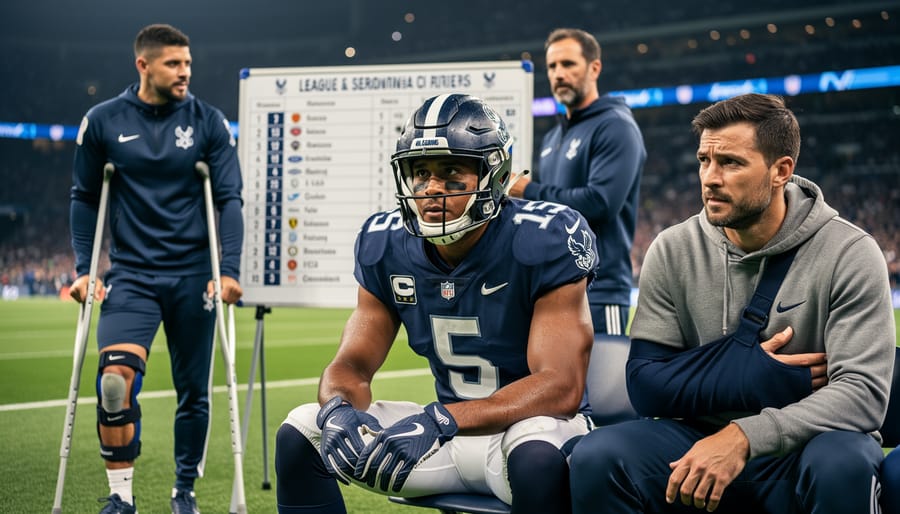
A pro athlete’s day runs on a tightly managed loop of training, fuel, recovery and mental reset, and the margin between good and elite is often decided… …
The fastest way to catch up on recent NBA highlights is to start with the Toronto Raptors’ 129-99 win over the Orlando Magic at home, then work through… …
A Kansas sportsbook promo is a bonus offer, usually a deposit match or a free bet, that you can only claim if you’re physically in a state where that… …
Comprehensive platforms cover multiple sports, leagues, and content types under one roof, while niche platforms focus deeply on a single sport or league …
NHL scenarios are conditional projections that map out how each team can clinch a playoff berth, division title, or wild-card spot based on their remaining games and the results of other clubs around the league. Think of them as the “if this, then that” roadmap every fan and bettor obsesses over once March rolls around and the standings tighten up. Key Takeaway: NHL scenarios translate complex standings math into actionable forecasts. For fans, they clarify what your team needs to do. For bettors, they reveal …
Exercise triggers a cascade of hormonal changes that influence everything from your energy levels and muscle growth to mood, metabolism, and recovery. When you move your body, whether through a quick sprint or a long gym session, your endocrine system responds by adjusting hormone production and release to match the physical demands placed on it. Understanding this connection gives athletes and fitness enthusiasts real tools to optimize performance, manage stress, and support long-term health goals. The hormones affected by exercise read like a who’s who …
DraftKings Kansas delivers the strongest welcome bonus in Kansas City’s sports betting market right now, pairing a generous new-user offer with consistent promotions tied to Chiefs, Royals, and Sporting KC action. After testing seven major sportsbook platforms operating in the KC area, we found the promotional landscape splits cleanly between operators offering aggressive acquisition bonuses and those rewarding long-term loyalty, and your ideal choice depends on whether you’re chasing big signup value or sustained betting rewards. Kansas City bettors have access to a competitive legal …
The 2026 Winter Olympics in Milano Cortina have delivered the drama Canadian hockey fans crave, but not without serious consequences. NHL players returned to Olympic ice for the first time in years, and the heightened intensity showed immediately: Kevin Fiala left Switzerland’s 5-1 loss to Canada on a stretcher Friday after a hit by Tom Wilson, requiring surgery that ended his tournament. Sunday brought another flashpoint when Wilson and France’s Pierre Crinon were both ejected for fighting during Canada’s 10-2 victory, while the U.S. stunned …
When you push through a tough workout, your body releases three primary hormones: endorphins, adrenaline (epinephrine), and human growth hormone (HGH). These chemical messengers work together to fuel your performance, sharpen your focus, and kickstart recovery the moment you start sweating. Understanding this hormonal response explains why you feel that post-game high after a pickup basketball session or why your body seems to know exactly when to dial up intensity during a sprint interval. For athletes looking to optimize training, fitness enthusiasts chasing better results, …
Game 6 moments define NHL playoff legacies, and the 2026 Stanley Cup Final delivered exactly that when the Carolina Hurricanes clinched their championship with a shutout victory over the Vegas Golden Knights on June 15. The series-clinching performance capped a dramatic back-and-forth battle that showcased everything hockey fans crave: overtime heroics, defensive masterclasses, and momentum swings that kept bettors and analysts guessing until the final horn. For Canadian sports enthusiasts tracking playoff trends, this year’s Cup Final offered a masterclass in Game 6 pressure. The …
Baseball news in 2026 isn’t just about wins and losses anymore. For Canadian sports bettors, every lineup change, injury report, and series preview now comes packaged with betting lines, promotional offers, and strategic opportunities that can turn knowledge into value. The integration of real-time baseball developments with sportsbook promotions has transformed how fans engage with the game, creating a landscape where staying informed directly impacts your ability to capitalize on enhanced odds, risk-free bets, and boosted payouts. This shift means the baseball news cycle now …
Accessing breaking sports news for betting edges comes down to three moves: set up real-time feeds from credible sources, filter noise with targeted keywords, and cross-reference headlines across platforms before you act. For Canadian sports bettors in 2026, this means monitoring injury reports, lineup changes, and weather updates minutes before the public catches on, turning fresh information into smarter wagers. The gap between a sharp bettor and a casual one often sits in those critical minutes after a headline drops. While most fans scroll social …
The sweet science keeps moving. This week alone, Tyson Fury steps into the ring against Mariusz Wach in Pattaya on July 24, while Anthony Joshua faces Kristian Prenga in Riyadh the following day. These fights matter beyond the immediate results because they shape title shots, betting lines, and the pecking order in divisions that shift with every knockout and decision. Right now, Oleksandr Usyk sits atop the heavyweight rankings at 24-0, with undefeated Agit Kabayel at number two and Fury holding the third spot despite …
Dillian Whyte longed for a WBC Heavyweight Championship title shot, but the 40-year-old former WBA Heavyweight Champion Alexander Povetkin defeated him via knockout. On Saturday in Brentford, England, a fight between Whyte and Povetkin was held at Matchroom Boxing’s Fight Camp. During the first four rounds, Whyte had the upper hand. In Round 2, he landed a lot of rapid punches to Povetkin’s frame. In Round 3, Whyte pummeled Povetkin with two colossal hooks, and the Russian’s legs dipped as a result. In Round 4, …
Houston Rockets forward Danuel House will leave the NBA’s “bubble” at the Walt Disney World Resort in Orlando, Florida, and skip the entire 2020 Playoffs after he allegedly let a female COVID-19 testing official enter his hotel room, according to Yahoo Sports’ Chris Haynes. The NBA issued a statement Friday night, indicating a few findings that House had in his room for several hours a guest who was not authorized to be on campus on September 8 and that there is no evidence found that …
Rejoice, football fans! There are several ways to stream live NFL games for free even without cable. The National Football League (NFL) offers free live streaming of its games on mobile devices via the NFL and Yahoo! Sports apps. Additionally, all the leading live TV streaming services in the U.S. now carry all the networks that broadcast NFL games. Although majority of these live TV streaming services have monthly recurring charges, they all provide free trials as an option. So, you can opt to simply …
Tony Romo’s shift from the stadium to the broadcast booth was coherent. According to the ex-Dallas Cowboys quarterback, such transition has paid off lavishly. Having retired from Cowboys since April 2017 prior to joining CBS as its lead color analyst the following season, Romo instantly found he had a knack for in-game analysis. He is known for his acquaintance of the game, thanks to his 14-year stint in the National Football League (NFL). Per the New York Post’s Andrew Marchand, Romo’s deal will occur over …
NFL fans are having a hard time trying to keep track of the teams that will permit audiences in their stadiums during the 2020 season, especially with the ongoing COVID-19 pandemic. Despite this inconvenience, the National Football League (NFL) has informed each of its 32 teams and those organizations’ local officials about making the calls on whether to allow fans to witness the games amid the pandemic. Check out the most recent developments below regarding the fan attendance and ticket policies for all 32 teams …
DraftKings Kansas delivers the strongest welcome bonus in Kansas City's sports betting market right now, pairing a generous new-user offer with consistent promotions tied to...
Accessing breaking sports news for betting edges comes down to three moves: set up real-time feeds from credible sources, filter noise with targeted keywords, and...
Dillian Whyte longed for a WBC Heavyweight Championship title shot, but the 40-year-old former WBA Heavyweight Champion Alexander Povetkin defeated him via knockout. On Saturday...
Houston Rockets forward Danuel House will leave the NBA's "bubble" at the Walt Disney World Resort in Orlando, Florida, and skip the entire 2020 Playoffs...
Los Angeles Lakers coach Frank Vogel stated that the team's third superstar is its "elite" defense. The team restrained the Houston Rockets to 43.1 percent...
Rejoice, football fans! There are several ways to stream live NFL games for free even without cable.
The National Football League (NFL) offers free live streaming of its games on mobile devices via the NFL and Yahoo! Sports apps. Additionally, all the leading live TV streaming services in the U.S. now carry all the networks that broadcast NFL games.
Although majority of these live TV streaming services have monthly recurring charges, they all provide free trials as an option. So, you can opt to simply cancel the subscription before the end of the trial period to keep the experience free.
Monday night NFL games are broadcasted on ESPN nationwide.
Thursday night NFL games are broadcasted nationwide on Fox and NFL Network for most of the season, but between the second and fourth weeks, only NFL Network broadcasts the games.
On Sundays, Fox Sports Go offers access to the NFL games apparently on Fox in your market, while CBS All Access grants access to the games on CBS in your market.
NFL Sunday Ticket has also made it possible for fans to stream live NFL games, including those that are beyond your TV market.
NHL scenarios are conditional projections that map out how each team can clinch a playoff berth, division title, or wild-card spot based on their remaining games and the results of other clubs around the league. Think of them as the “if this, then that” roadmap every fan and bettor obsesses over once March rolls around and the standings tighten up.
Key Takeaway: NHL scenarios translate complex standings math into actionable forecasts. For fans, they clarify what your team needs to do. For bettors, they reveal value in futures markets and game-by-game props as elimination or clinch situations shift the odds.
Why scenarios matter goes beyond bracket-watching. They dictate strategy for coaches managing workloads, shift betting lines as playoff probabilities swing wildly in a single night, and give you the edge when placing a wager on a team that’s already locked in or fighting for survival. A squad with nothing to play for might rest stars. A team on the bubble? Expect full-throttle desperation hockey.
The mechanics involve points percentage, games in hand, regulation wins as tiebreakers, and the cascading effects of other divisional outcomes. One upset in a key matchup can flip four teams’ playoff odds overnight. Injuries and suspensions add another layer of volatility, turning a likely scenario into a longshot or vice versa.
This guide breaks down exactly how NHL scenarios work, the different types you’ll encounter as the season winds down, and how to use them whether you’re tracking your hometown club or hunting for sharp betting angles. We’ll keep the jargon light and the insights sharp, so you know what to watch for when the playoff picture gets messy.
What NHL Scenarios Mean for Teams and Fans
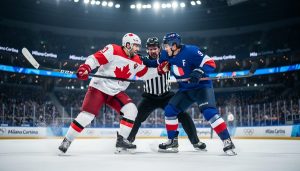
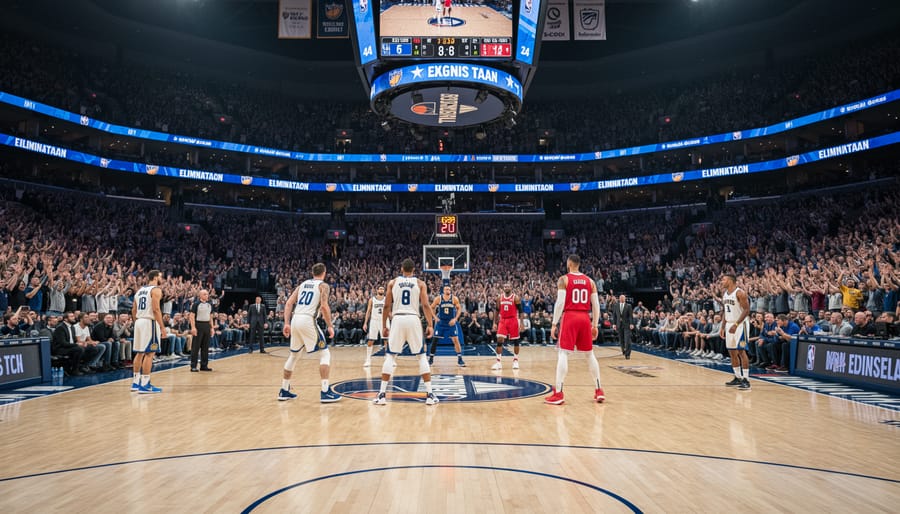
A late-season arena atmosphere captures how every game can swing momentum toward clinching or elimination.
NHL scenarios are conditional “if-then” outcomes that project how specific game results affect team standings, playoff positioning, and season-ending possibilities. Think of them as the math behind questions like “If the Maple Leafs lose tonight and Ottawa wins in regulation, who moves into the wild card spot?” During the regular season, these calculations track which teams control their playoff destiny and which need help from other results to stay alive.
The stakes shift depending on where you are in the calendar. Early-season scenarios are hypothetical exercises, interesting but rarely decisive. By late March, they become daily obsessions for fans refreshing standings pages and bettors adjusting wagers based on motivation and rest decisions. Teams out of contention start tracking draft lottery scenarios, where losing can paradoxically improve long-term positioning.
Understanding the core scenario types helps you cut through the noise:
Clinching scenarios
The exact combination of wins, losses, or other teams’ results that guarantees a playoff spot or division title. Once clinched, a team has mathematically secured its position regardless of remaining outcomes.
Elimination scenarios
The opposite calculation, when a team can no longer reach the playoffs even if it wins every remaining game, usually triggered when the points gap becomes insurmountable given games left.
Tiebreaker scenarios
Projections for teams finishing with identical point totals, determined by regulation wins, head-to-head records, or goal differential. These become critical in tight divisional races where a single stat can flip seeding.
Magic numbers
The combined total of points a leading team needs to earn, or points a trailing team must drop, to clinch a specific position. It simplifies complex math into a single countdown figure fans can track.
For individual players, scenarios extend beyond team success. A forward chasing a scoring title watches nightly results to see if rivals gain ground. Contract incentives sometimes hinge on games played or statistical benchmarks, creating personal scenarios within the team’s broader race. These human elements add layers to the pure standings math, especially when star players sit out meaningless final games to protect bonuses or health.
The draft lottery introduces inverse scenarios for non-playoff teams, where finishing lower in the standings improves odds at a top-three pick. This creates uncomfortable late-season dynamics where fan interest splits between short-term competitiveness and long-term asset accumulation.
How NHL Scenarios Work Throughout the Season
Points and Standings Math
Every NHL game distributes at least two points into the standings, but not always to the same team. A regulation or overtime win awards the victor two full points while the losing side gets zero. The wrinkle comes when a game extends past regulation: the loser receives one point for reaching overtime or a shootout, meaning three total points enter the league standings from that single contest. This asymmetry is central to the overtime loss point rules and drives much of the scenario complexity late in the year.
Teams with games in hand hold phantom points, possible outcomes that haven’t materialized yet. A club sitting two points back with three games remaining controls up to six theoretical points, while a team ahead with no games in hand is locked at its current total. Scenario math multiplies fast: if Team A needs four points from three games and Team B needs two from two, each combination of wins, overtime losses, and regulation losses produces a different final standing.
Shootout wins count identically to overtime wins in the points column, but the tiebreaker hierarchy favours regulation wins when teams finish level on points. A club that grinds out victories in sixty minutes holds the edge over one that relies on extra time, meaning scenario projections must track not just points but the composition of those points to predict final seeding accurately.
Tiebreaker Rules That Drive Scenarios
When two or more teams end the regular season with the same point total, the NHL applies a standardized sequence of tiebreakers to determine final standings and playoff seeding. These rules matter enormously in scenario modeling because a single regulation win or head-to-head result can be the difference between home ice and a first-round exit.
The NHL’s official tiebreaker hierarchy unfolds as follows:
Regulation wins (RW), total wins earned in regulation time, excluding overtime and shootout victories
Regulation and overtime wins (ROW), wins in any format except shootouts
Total wins, all victories regardless of format
Head-to-head points, results from games played directly between the tied teams during the regular season
Goal differential, total goals scored minus total goals allowed across all 82 games
Goals scored, raw offensive output for the season
Regulation wins sit at the top because they reward teams that close out games in sixty minutes rather than relying on the coin-flip nature of three-on-three overtime or shootouts. This emphasis makes late-season games tighter and more strategically complex, coaches weigh pulling the goalie for an extra attacker differently when a regulation win carries tiebreaker weight. Head-to-head records come into play less often than casual fans expect; most ties break earlier in the sequence, but when divisional rivals finish level on points, their season series becomes the deciding factor that scenario articles highlight obsessively.
Common Types of NHL Scenarios
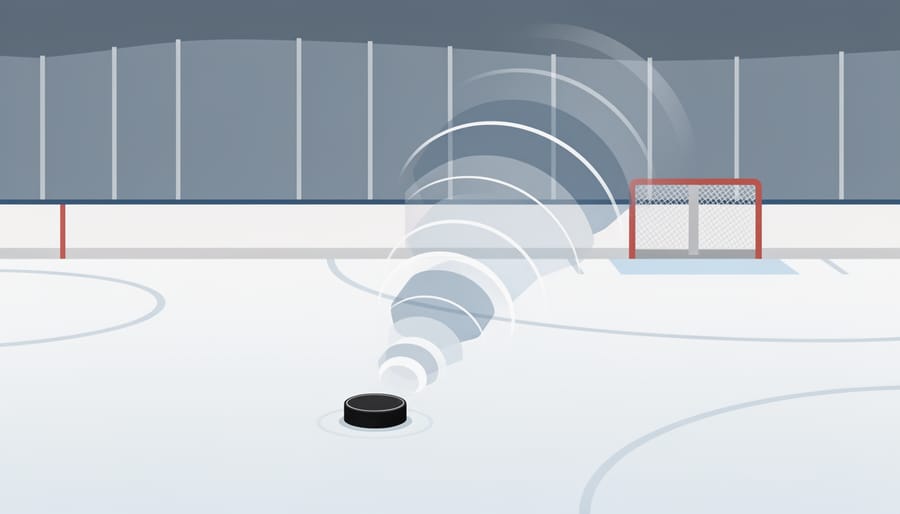
The puck on the ice symbolizes how small results can cascade into major scenario shifts as playoff races tighten.
NHL scenarios fall into distinct categories, each becoming critical at different points in the season. Understanding these types helps you follow the stakes in any given game and recognize when teams are playing with heightened urgency or, conversely, coasting through meaningless contests.
Playoff clinching scenarios emerge when a team’s point total guarantees postseason participation regardless of other results. These typically surface in mid-March for top contenders. A clinching scenario might read: “Team X clinches a playoff spot with a win tonight OR if Team Y loses in regulation.” The magic number, the combined points a team needs to accumulate while others drop to secure a berth, shrinks daily as the regular season winds down.
Elimination scenarios represent the opposite threshold. A team is mathematically eliminated when they can no longer accumulate enough points to catch the eighth seed, even if they win every remaining game. Bubble teams face these calculations starting in late February, with fanbases refreshing standings obsessively to see if hope remains alive.
Wild card positioning scenarios are the most complex category because they involve multiple teams across both divisions within a conference. The two wild card spots go to the highest-ranked non-division leaders, creating three-way or four-way races where a single result affects half a dozen teams’ outlooks. These scenarios dominate coverage from late March through the final weekend, when a regulation loss for one team can simultaneously boost three others.
Divisional seeding scenarios determine playoff matchups within each division. Finishing first, second, or third in your division dictates your first-round opponent and home-ice advantage. Teams separated by two points in early April face scenarios where winning out might vault them from a third seed facing the division champion to a second seed with a more favourable draw.
Home-ice advantage scenarios extend beyond division races. The team with more regular-season points hosts Games 1, 2, 5, and 7 in a playoff series. For evenly matched Cup contenders, scenarios in the final week often centre on securing the conference’s top record to guarantee home ice through multiple rounds, a meaningful edge given the last-change advantage and crowd energy.
Draft lottery scenarios affect teams already eliminated, though they receive less mainstream attention. Finishing with the league’s worst record maximizes lottery odds for the first overall pick. Tanking accusations surface when basement teams face late-season scenarios where losing actually serves their long-term interests, creating uncomfortable incentives that the NHL’s lottery odds have tried to discourage but not eliminate entirely.
How Player Incidents and Suspensions Change Scenarios
A close moment in full equipment reflects how injuries and suspensions can rapidly change a team’s path through the standings.
Suspension Impact on Standings
When a star player receives a multi-game suspension for a player incidents the impact extends beyond the locker room. A three-game ban during a tight March playoff race can drop a team’s projected point total by 1-2 points in scenario models, enough to shift their wild card probability from 72% to 51%. Consider a top-line center suspended five games: the team might win just one or two of those contests instead of the expected three, falling from third in the division to a wild card spot, or missing entirely. Teams recalculate their magic numbers daily, and a suspension forces them to compensate by winning games they’d normally rest players for or pushing injured skaters back early. The ripple effect hits opponents too: division rivals suddenly see their own playoff odds jump 8-10% when a contender loses its best scorer for a week, creating new scenario branches that weren’t viable 48 hours earlier.
Injury Timing and Scenario Volatility
Late-season injuries inject massive uncertainty into scenario projections because the models assume relatively stable team performance. When a top-line center or starting goaltender goes down in March with teams clustered within three points, the entire calculation shifts. A club that looked like a 60% lock for a wild card spot might drop to 40% overnight if their best player misses the final ten games.
The volatility compounds when multiple teams fighting for the same playoff position lose key personnel simultaneously. Scenario articles published on Monday can become obsolete by Wednesday if two contenders lose star forwards to upper-body injuries. Projection systems struggle to recalibrate quickly because they lack sufficient data on how a lineup performs without its cornerstone player under playoff-race pressure.
Timing matters enormously. An injury in game 75 leaves almost no margin for a team to adjust its style or find chemistry with call-ups. The compressed schedule means rivals can leapfrog in the standings before the injured team plays its next home game. Bettors who rely on scenario breakdowns need to cross-reference injury reports constantly, because a two-day-old projection may assume full health that no longer exists.
Where and How NHL Scenarios Are Used
NHL scenarios aren’t just theoretical exercises, they show up daily across sports media, betting markets, and team war rooms once the playoff picture tightens. Understanding where and how these projections surface helps you separate noise from actionable insight.
Major sports networks like Sportsnet, TSN, and The Athletic publish scenario breakdowns as soon as mathematical elimination or clinching becomes possible. These articles typically include if-then tables showing exactly what each team needs: “If Toronto wins in regulation and Florida loses, the Leafs clinch the Atlantic.” Broadcasters reference scenarios during game broadcasts, especially in late March when a single goal can shift multiple teams’ postseason odds.
Fans track magic numbers, the combined points a team needs to guarantee a playoff spot, through various platforms and tools:
‘s official standings page with live playoff probability percentages
Sports media dashboards from ESPN, Sportsnet, and TSN with scenario widgets
Betting apps like Bet365 and FanDuel that display clinching odds and must-win game flags
Independent scenario calculators and playoff predictors that let users simulate remaining schedules
Team subreddits and fan forums where users manually calculate and share elimination scenarios
These resources condense complex standings math into digestible updates, letting casual followers check their team’s situation without running tiebreaker formulas themselves.
Sportsbooks adjust lines aggressively once scenario clarity emerges. A team that’s already clinched home-ice advantage might rest stars in the final game, tanking the betting value. Conversely, a must-win scenario for playoff positioning often tightens spreads and lifts totals as desperation drives intensity. Books factor scenario motivation into opening lines days before game time, and sharp bettors exploit mismatches where one side has everything to play for and the other has nothing.
Behind closed doors, NHL front offices use scenario modeling to plan postseason matchups. If multiple seeding outcomes remain possible, teams may strategically deploy lineup decisions, resting injured players or adjusting goalie rotations, to position themselves against preferred first-round opponents. Coaches don’t admit this publicly, but scenario awareness absolutely influences final-week roster management when playoff seeding hangs in the balance.
Reading Scenario Breakdowns as a Bettor
Scenario breakdowns become betting roadmaps once you know what to look for. When a team needs three points from its final four games to clinch, every matchup carries heightened urgency. That desperation shows up in how hard players compete, how coaches manage minutes, and whether the goaltender plays on short rest. Sharp bettors scan scenario articles to spot these pressure points before the market adjusts.
Must-win stakes change everything. A team facing elimination often plays tighter defensively, which pushes totals down. Conversely, a club that has already clinched may rest stars or coast through the third period, creating value on the opponent’s moneyline or the under. Check scenario timelines to identify when teams can afford to lose versus when every shift matters.
Motivation asymmetry is gold for bettors. If one side is battling for wild card position while the other has locked up first place and is resting its top line, the mismatch is obvious. Look for games where scenario math creates a clear motivation gap, then cross-reference line movement to see if the market has caught up.
Rest decisions flow directly from scenario clarity. Once a team clinches, expect back-to-back games to feature backup goaltenders and reduced ice time for veterans. These roster tweaks rarely stay secret, but scenario articles help you anticipate them before official announcements. Pair that intel with sports betting promos to maximize value on games where rest rotations tilt the odds.
Track tiebreaker implications too. When regulation wins matter for seeding, teams push harder in the final minutes instead of settling for overtime. That late aggression can swing totals and create live betting opportunities as the clock winds down.
Frequently Asked Questions About NHL Scenarios
When do NHL scenarios actually start to matter?
Scenarios become meaningful in late February and March when teams enter or near mathematical elimination or clinching range. Before that, too many games remain for projections to carry real weight, one hot streak or cold stretch reshapes everything.
How accurate are scenario projections?
Early-season projections are educated guesses at best; accuracy improves dramatically once teams have fewer than ten games left and the variables narrow. Final-week scenarios are highly reliable because the math becomes straightforward with limited possible outcomes.
What happens if three teams tie in points?
The NHL applies regulation wins first, then head-to-head records among the tied teams, and finally goal differential if needed. A three-way tie creates complex scenario trees because each tiebreaker can swing seeding dramatically based on the final game results.
Can a team clinch a playoff spot without playing another game?
Yes, if other results eliminate enough competitors, a team can clinch while idle. This happens when the teams chasing them lose and can no longer mathematically catch up, even with all their remaining games as wins.
Understanding scenario mechanics helps bettors evaluate motivation and lineup decisions. A team that’s already clinched home ice might rest stars, affecting the performance impact you’d expect from their usual roster. Conversely, a must-win scenario game sees elevated intensity, players push harder, adrenaline spikes similar to how exercise hormones drive physical output under stress, and coaches deploy their best personnel without regard for rest or injury risk. Recognizing these situational factors turns scenario awareness into a strategic edge when evaluating lines and totals.
Understanding NHL scenarios transforms passive watching into active engagement with the sport’s strategic depth. Following standings math and conditional outcomes gives you insight into what teams are playing for beyond the final score, playoff positioning, rest decisions, and lineup choices all become clearer when you know the scenario landscape.
For bettors, scenario awareness creates edges. A team facing elimination plays differently than one that has already clinched. Motivation shifts, lineups rotate, and coaches manage minutes with their eye on what comes next. Reading the scenario context helps you anticipate these adjustments before the market fully reflects them.
The volatility introduced by player incidents and suspensions keeps even late-season scenarios from being purely mathematical exercises. A single suspension can derail a carefully projected path to the playoffs, while an injury to a star player forces analysts to recalculate win probabilities across multiple teams. This human element, the unpredictability of on-ice events and disciplinary outcomes, is what makes scenario tracking compelling rather than just academic.
As the regular season winds down, check the standings with fresh eyes. You’re not just looking at points; you’re seeing the chess match of who needs what, when they need it, and what stands in their way.